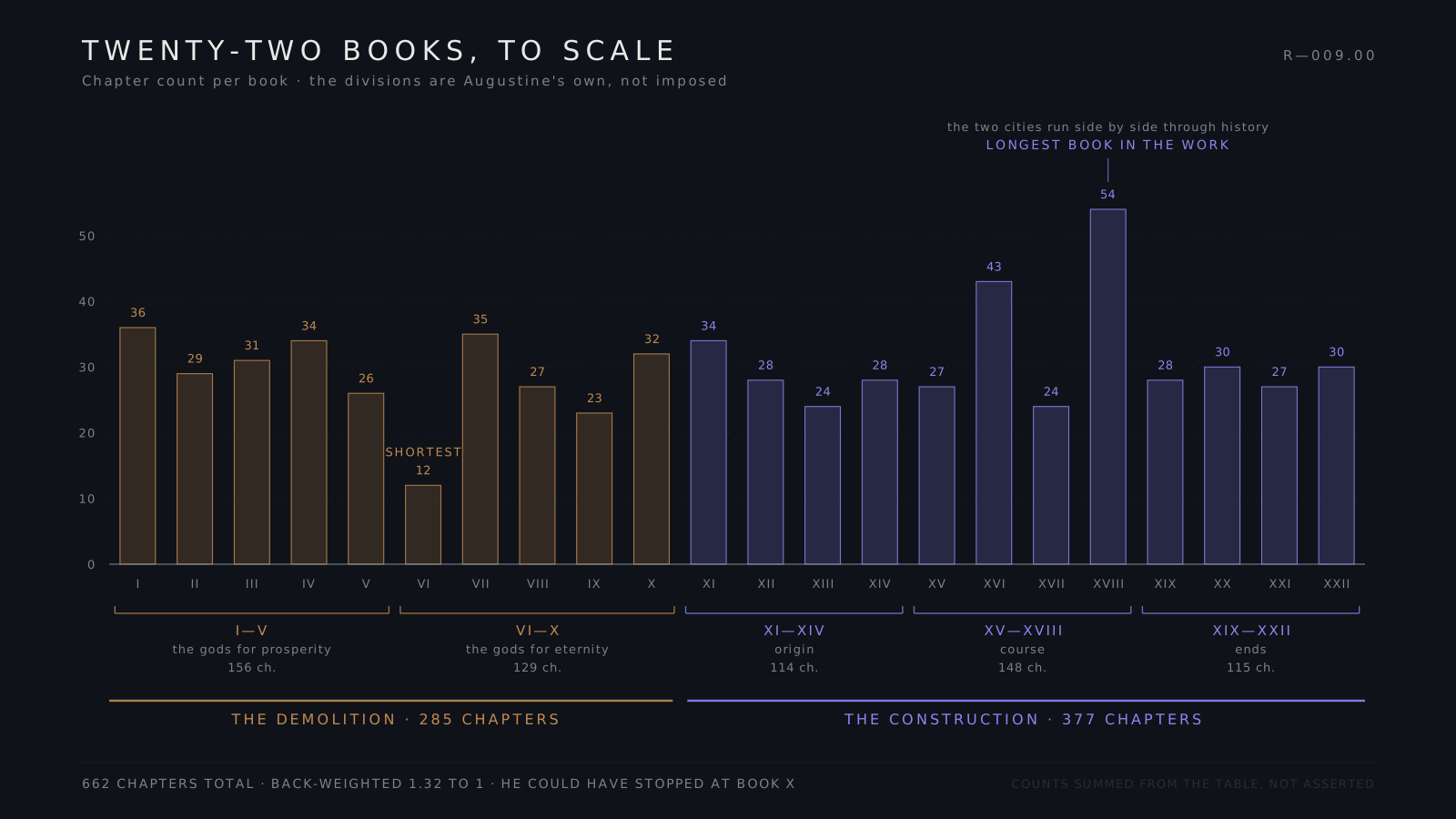
Rome fell in 410 and the survivors said it fell because it had abandoned its gods. A bishop in North Africa spent the next thirteen years answering, and the answer ran to twenty—two books. This is a close reading of De Civitate Dei that takes the architecture seriously — Augustine states his own plan twice, and it runs 285 chapters of demolition against 377 of construction. It follows the pirate's answer to Alexander, the eleven chapters Augustine gives to women raped in the sack and his flat refusal to let them carry guilt for it, Roman virtue credited in full and then shown to have been paid in full, the dismantling of Cicero's definition of a commonwealth and the stranger definition offered in its place, and peace as the tranquillity of order — the claim that nothing whatever is pursuing anything else. It also states what the book cost: Book XXI, the damned infants, the massa damnata, and the endorsement of religious coercion. Same mind, same method, no seam to cut along.
A reading of Augustine's De Civitate Dei (begun 413, completed 426): the sack of Rome in 410 and the accusation that Rome fell because it abandoned its gods; the architecture of all twenty-two books, which Augustine states himself and which runs 285 chapters of refutation against 377 of construction; Roman virtue credited and then shown to have been paid in full; the captured pirate's answer to Alexander; the demolition of Cicero's definition of a commonwealth and the replacement Augustine offers in its place, which drops justice and measures a people by what it agrees to love; peace as the tranquillity of order, and the claim that nothing whatever pursues anything else; the refusal to identify either city with any visible institution; and an unflinching account of Book XXI, the damned infants, the massa damnata and the endorsement of religious coercion — the same mind, the same method, no seam to cut along.
→ Enter the world of The City of God → Open the reading
Work 001 — Coastal House →
Architecture · South Florida