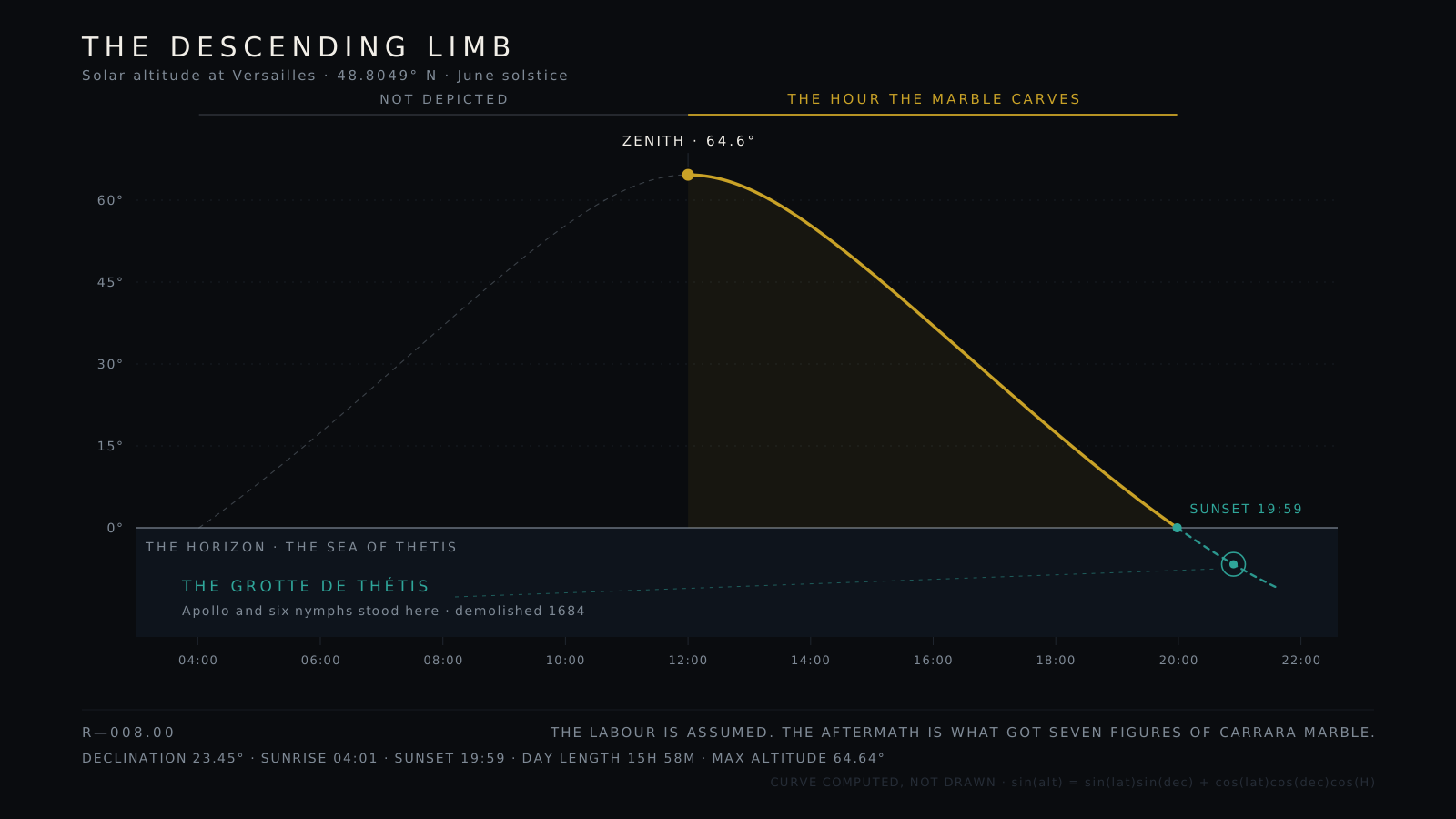
Louis XIV had the whole Apollonian cycle available and unlimited money, and the piece he put in the most intimate room of Versailles was the god too tired to lift his own arm while six women washed the day off him. This is a reading of Apollon servi par les nymphes de Téthis — François Girardon and Thomas Regnaudin, marble, 1666—75 — and of the room it was made for: the Grotte de Thétis, a deliberately artificial cave of shell, mirror and water—driven birdsong, built under the reservoir that fed the gardens and demolished in 1684. The labour is never depicted. Only the aftermath is carved, and that choice is the whole argument. The reading takes the marble apart, shows in plan what Hubert Robert's 1778 relocation destroyed, and then follows the same hour through nineteen men across twenty—six centuries — Ashurbanipal, Hadrian, Marcus Aurelius, Musashi, Rubens, Frederick, Shackleton, Mandela and the rest — sorted not by century but by the six devices they kept arriving at with no possible contact between them. It ends by stating where its own reasoning is weak, which is the part a canon usually leaves out.
A reading of Apollon servi par les nymphes de Téthys (François Girardon and Thomas Regnaudin, marble, 1666–75, after a design by Charles Le Brun) and of the room it was built for: the Grotte de Thétis at Versailles, an artificial cave of shell and mirror and water-driven birdsong, demolished in 1684. The subject Louis XIV chose for the most intimate room of his palace was not the chariot but the hour after it — the god set down, and six nymphs washing the day off him. The reading takes the object apart, shows what Hubert Robert's 1778 relocation destroyed, and then follows the same hour through nineteen men across twenty-six centuries, sorted by the six devices they kept arriving at independently. It ends with an honest account of where the reasoning is weak.
→ Enter the world of The Bathing of Apollo → Open the reading
Work 015 — The City of God →
Reading · The Two Cities