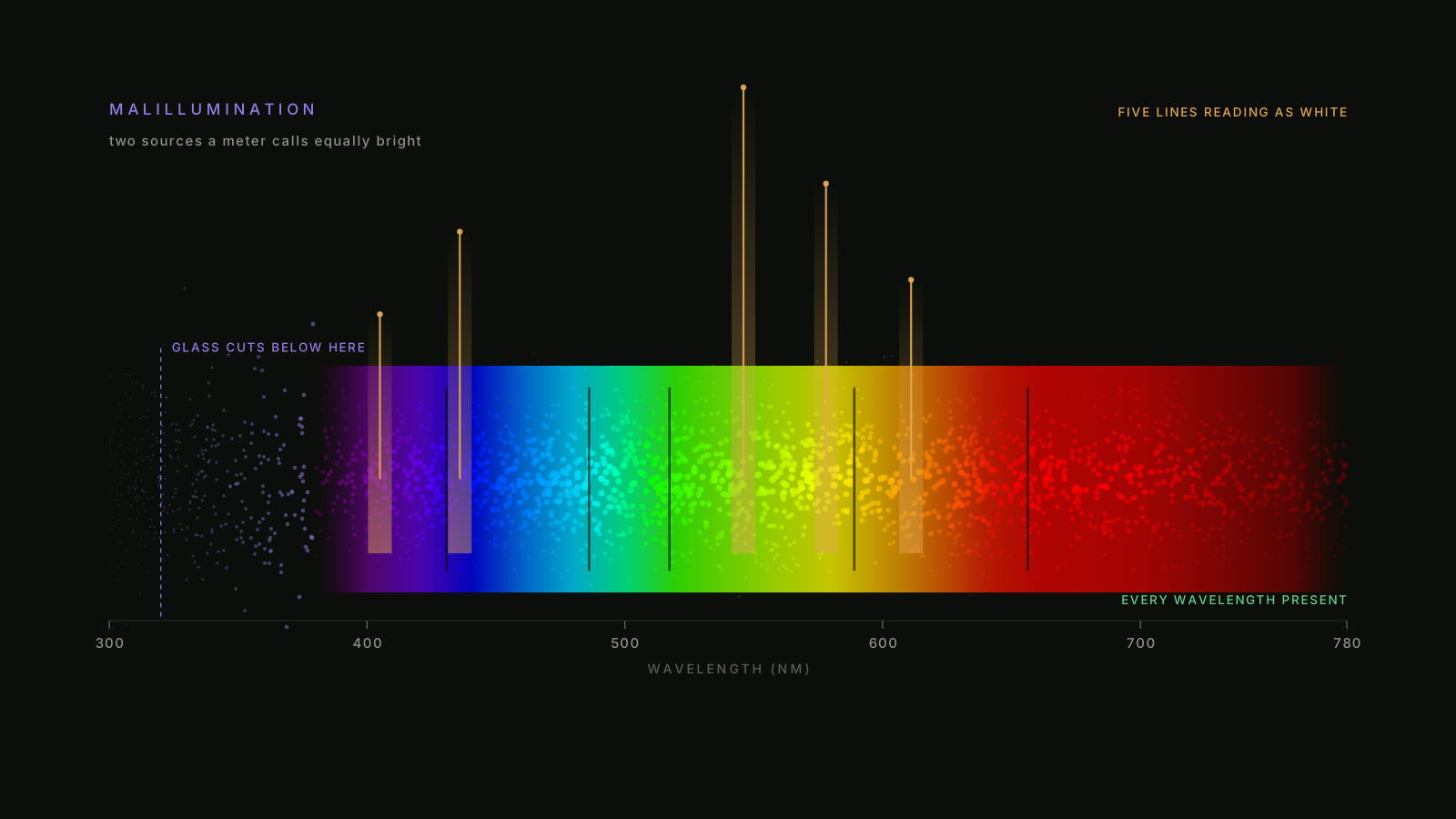
A bank officer with a 16mm camera spent forty years filming plants moving too slowly for anyone to see, and noticed something that was not about plants: the lamp in the room was never a constant. It was a treatment nobody had labelled. From that came the pumpkin that changed sex when the light changed, the coinage malillumination, and the claim the book is remembered for — that light enters the body through the eyes as a signal, below awareness, on a schedule. He was twenty-five years early on the physiology and badly wrong about televisions. Both come from the same source. Ten claims, audited against what the literature settled.
A close reading of John N. Ott's Health and Light: The Effects of Natural and Artificial Light on Man and Other Living Things (Devin-Adair, 1973): the time-lapse method, the pumpkin and chloroplast results, the coinage malillumination, the Sarasota classrooms and the confound that makes them unattributable, the radiation chapter that aged worst, and a claim-by-claim ledger of what melanopsin, circadian research and controlled trials later confirmed or killed.
→ Enter the world of Health and Light → Open the full reading
Work 010 — The Beginning of Infinity →
Reading · The Open Field